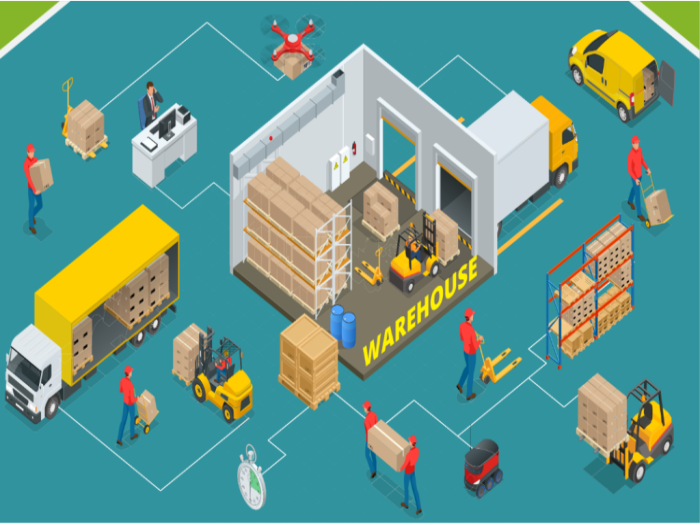
In the realm of logistics, warehousing plays a crucial role in the storage and distribution of goods. However, one aspect that often perplexes businesses is understanding the costs associated with warehousing. From fixed expenses to variable overheads, grasping the intricacies of warehousing costs is paramount for optimizing operations and maximizing profitability.
Warehousing costs encompass all expenses incurred in the storage, handling, and management of inventory within a warehouse facility. These costs are essential components of a company's logistics budget and can significantly impact its bottom line.
Fixed costs are those expenses that remain constant regardless of the level of warehouse activity. Examples include rent or mortgage payments, insurance premiums, and salaries for permanent staff.
Variable costs fluctuate in direct proportion to the volume of goods stored or handled. These may include utilities, labour for temporary workers during peak seasons, and equipment maintenance.
Several factors influence the magnitude of warehousing costs:
The geographical location of a warehouse affects transportation expenses, labor availability, and property costs. Warehouses situated near major transportation hubs may incur higher rents but benefit from reduced shipping costs.
The size and layout of a warehouse impact operational efficiency and space utilization. An oversized warehouse may lead to increased fixed costs, while poor layout design can hinder workflow and productivity.
Investments in technology and automation can streamline warehouse operations, reducing labour costs and minimizing errors. However, the initial capital outlay for implementing such systems must be considered against potential long-term savings.
Effective inventory management practices, such as demand forecasting and just-in-time inventory replenishment, can optimize stock levels, minimizing holding costs and the risk of obsolescence.
Understanding warehousing costs is crucial for businesses to make informed decisions and maintain competitiveness in the market. By accurately assessing and controlling these expenses, companies can enhance operational efficiency, improve customer service levels, and achieve cost savings.
Balancing inventory levels to meet customer demand without excess stock can minimize holding costs and reduce the need for additional warehouse space.
Utilizing vertical storage systems, rack optimization, and slotting techniques can maximize warehouse space utilization, reducing the need for expansion and associated costs.
Analysing and optimizing warehouse processes, such as order picking, packing, and shipping, can enhance productivity, reduce labour expenses, and minimize errors.
Kapoor Diesels successfully reduced labor costs and improved inventory accuracy by implementing a state-of-the-art warehouse management system, optimizing processes, and reducing reliance on manual data entry.
Kapoor Diesels outsourced non-core warehouse activities, such as packaging and labelling, to third-party logistics providers, reducing overhead costs and allowing internal resources to focus on core business operations.
In conclusion, understanding warehousing costs is essential for businesses operating in the logistics sector. By analysing the different types of costs, identifying key cost drivers, and implementing strategic initiatives to reduce expenses, companies can enhance operational efficiency, improve profitability, and gain a competitive edge in the market.